

For a complete guide to ecommerce search, see our comprehensive ecommerce search guide.

Create a search engine for your website
What are the basic components of an eCommerce site search engine?
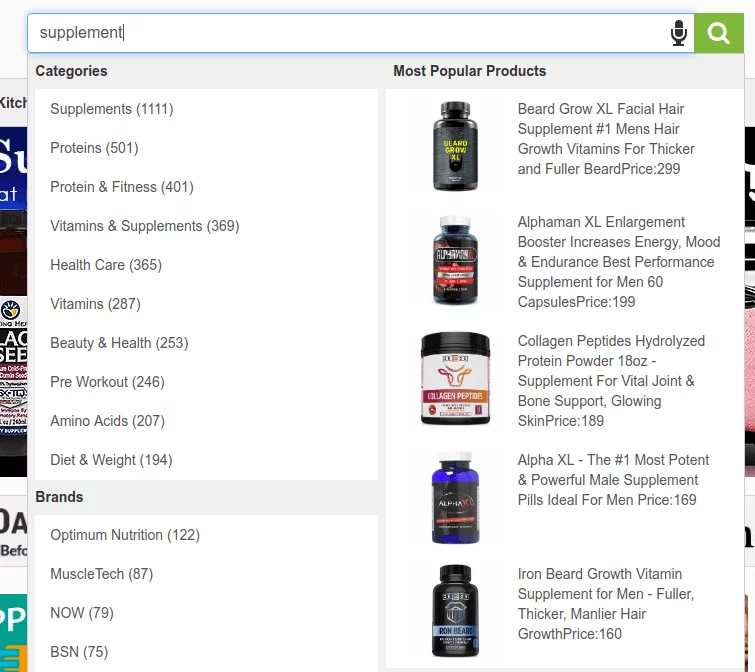
- Autocomplete
- Spell-correct
- Search autocomplete and search results page front end User interface
- Recent, trending searches
- Multi-device responsiveness
- A real-time product feed
- Search A/B testing
- Categories, facets, and filters
- Sort by functionality( sort by relevance, sort by price, etc)
- Price filter or slider
- NLP (natural language processing)
- Pagination/ Infinite scroll
- Product feed Indexing
- Synonyms
- Product promotion mechanism
- Out of stock handling
- Personalization
- Search analytics
- Rule engine
- Search landing page creator
Add an eCommerce site search engine to your website
Here we will visit the steps required to add ExpertRec’s eCommerce site search engine to your website. This is one of the easiest setup processes of all the available options out there and is highly recommended.- Navigate to https://cse.expertrec.com/newuser?platform=cse and signup with your Google ID.
- Enter your website’s URL when prompted. You can select a server location near you and add the URL of your sitemap if you wish to. These will be auto-detected otherwise.
- You can play around with the settings and customize the UI as the crawl runs. Once it is complete, you can check out a fully functional demo before taking the search to your website.
- You can take the search to your website with little to no effort. All you need to do is to paste the code snippet available on the dashboard on your website.
eCommerce Search Tags

Ecommerce Search Relevance

Ecommerce search engine
Accuracy
Have a list of target keywords such as “iphone”, “iphone cable”, “Thinkpad” etc that you will test each of your target search engines with. Have a score of 1-5 to rate each of them. Keep increasing your target keyword list if you find that most search engines have a similar performance.Spelling Errors
This is the most important test. Make spelling errors and see if the search engines retrieve the right products. This could include words such as ipone, smsng and similar errors.Sorting/Filtering
A good ecommerce search engine allows customers to sort search results by price, relevance, ratings and relevance. The filters will allow the customers to refine products by category, brand, ratings and more. Advanced search engines will be able to populate relevant categories based on the search term.Synonyms
When you search for “couch” if there are not enough exact text matches, the search engine should also populate results related to sofas. Most ecommerce search engines have a provision inside their control panel to do this.NLP Queries
NLP queries are queries such as “shirts less than 25$” and “shirts for halloween”. Such queries are made by everyday customers and not every ecommerce search engine can handle such queris.No results found
Good eCommerce search engines provide alternative options when no results are found. If a search engine doesn’t show any alternative options, it scores pretty low for this test. Having been conditioned by Google, today’s consumers have high expectations when it comes to search functionality. It’s far from surprising then that – as Nielsen Norman Group’s exhaustive E-Commerce User Experience found – “Most e-commerce customers go directly to a site’s search tool to find products.” Given that none of the leading eCommerce platforms have strong native search, this piece focuses on what to look for in a third-party search solution along with the core.
Why Is Ecommerce Site Search Crucial for Sales?
Visitors who take advantage of your eCommerce search engine are like customers who approach a sales clerk at Nordstrom’s and ask where to find a red dress. They’re begging to be helped. The response of the salesperson to the visitor’s question is intricately tied to the outcome of the visit. Will the shopper look around a bit and leave empty-handed? Will the shopper find and purchase the dress? Will the shopper buy the red dress, a blue dress, a green dress, and several bags of accessories to match? And what will that person share about their buying experience with others? Every question the prospect asks is the savvy salesperson’s opportunity to shine. The same goes for your eCommerce site search tool. The response it gives to shoppers can make or break the sale. According to an Econsultancy report, visitors who take advantage of an eCommerce site search tool convert at almost double the rate of those who don’t. Imagine what can happen when you not only offer a site search option but use the tips below to turn your eCommerce search engine into a sales tool extraordinaire. Site search is one of the most important yet most overlooked functions of any eCommerce site. Test these design best practices to help improve your on-site conversions. Your customers and prospective customers turn to search because they need something that the current page isn’t showing them, or they know exactly what they want. The better your ecommerce search engine is at returning the desired results, the more likely your visitors are to make a purchase.How to get Best eCommerce Search Results
The best eCommerce search engine is the one that does the work of an exceptional salesperson: It’s able to answer any questions your shoppers may have, provide suggestions, and help move shoppers further down the path to a satisfying purchase. The goal is to make your products or services easy to find, a breeze to select, and simple to buy. That’s the cake. The icing is when you walk alongside them to suggest items they need, but might have forgotten. The clerk’s thoughtful prompt of, “Can I get you some batteries for that flashlight?” has kept many a camper from stumbling in the dark. How many times have you become frustrated with the usability of an eCommerce search engine that requires exact (even case-sensitive) spellings before it returns anything other than “Item not found”? Or maybe you’ve tried to perform a category search, but the site search only dealt with product names – how useful is that? The best eCommerce Search Results can be given only by a search engine that has top both features like typo tolerance, voice search, auto-complete, auto-suggest, etc. If you have a product feed, you can create your own eCommerce search engine in 5 minutes from here.Ecommerce site search is the internal search functionality on an online store that helps customers find products by entering keywords. It searches across product titles, descriptions, categories, and attributes to return relevant results.
Customers who use site search convert at 2-3x higher rates than those who browse. A fast, accurate search reduces bounce rates, increases average order value, and reveals what customers are looking for through search analytics.
Key improvements include adding autocomplete suggestions, enabling typo tolerance, implementing faceted filters, optimizing product data with relevant keywords, and using search analytics to identify gaps in your catalog.


